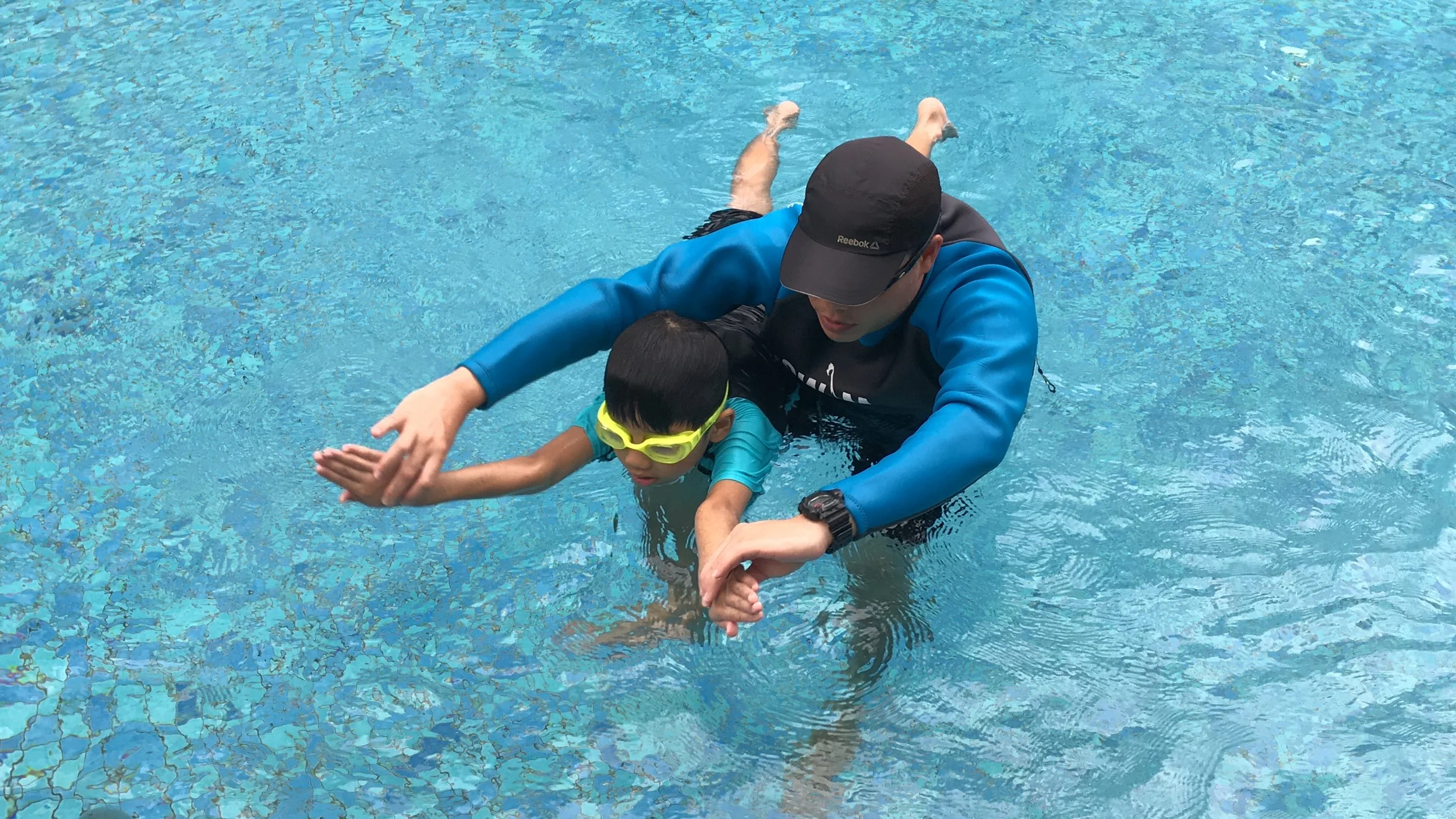
What Swimming Teaches Children About Patience and Resilience
Swimming skills are rarely mastered immediately
A child may need several attempts before learning to float independently, coordinate breathing or complete a new swimming distance.
This teaches an important lesson:
Not succeeding immediately does not mean they cannot succeed.
Children experience small, visible improvements
Swimming provides clear milestones such as:
Putting the face in the water
Floating without support
Reaching the pool edge
Swimming a short distance
Improving a stroke
Completing a challenging drill
Each milestone can show the child that practice produces progress.
Mistakes become part of learning
A missed breath, uneven kick or incorrect arm position gives the coach an opportunity to provide feedback. Children then try again with a small correction.
Research concerning physical exercise more broadly has found associations between participation, self-efficacy and resilience in children. It does not prove that swimming alone creates resilience, but the lesson environment can provide practical opportunities to practise persistence.
Progress develops self-belief
When children accomplish something that previously felt difficult, they gain evidence that they can improve through effort.
That confidence may help them approach their next swimming challenge more positively.
Parents should praise effort, not only results
Instead of only saying:
You swam the whole distance!
Parents can also say:
You kept trying even when the breathing was difficult.
This reinforces the effort behind the achievement.
Swim It Right helps children progress through supportive and structured kids’ swimming lessons in Singapore.