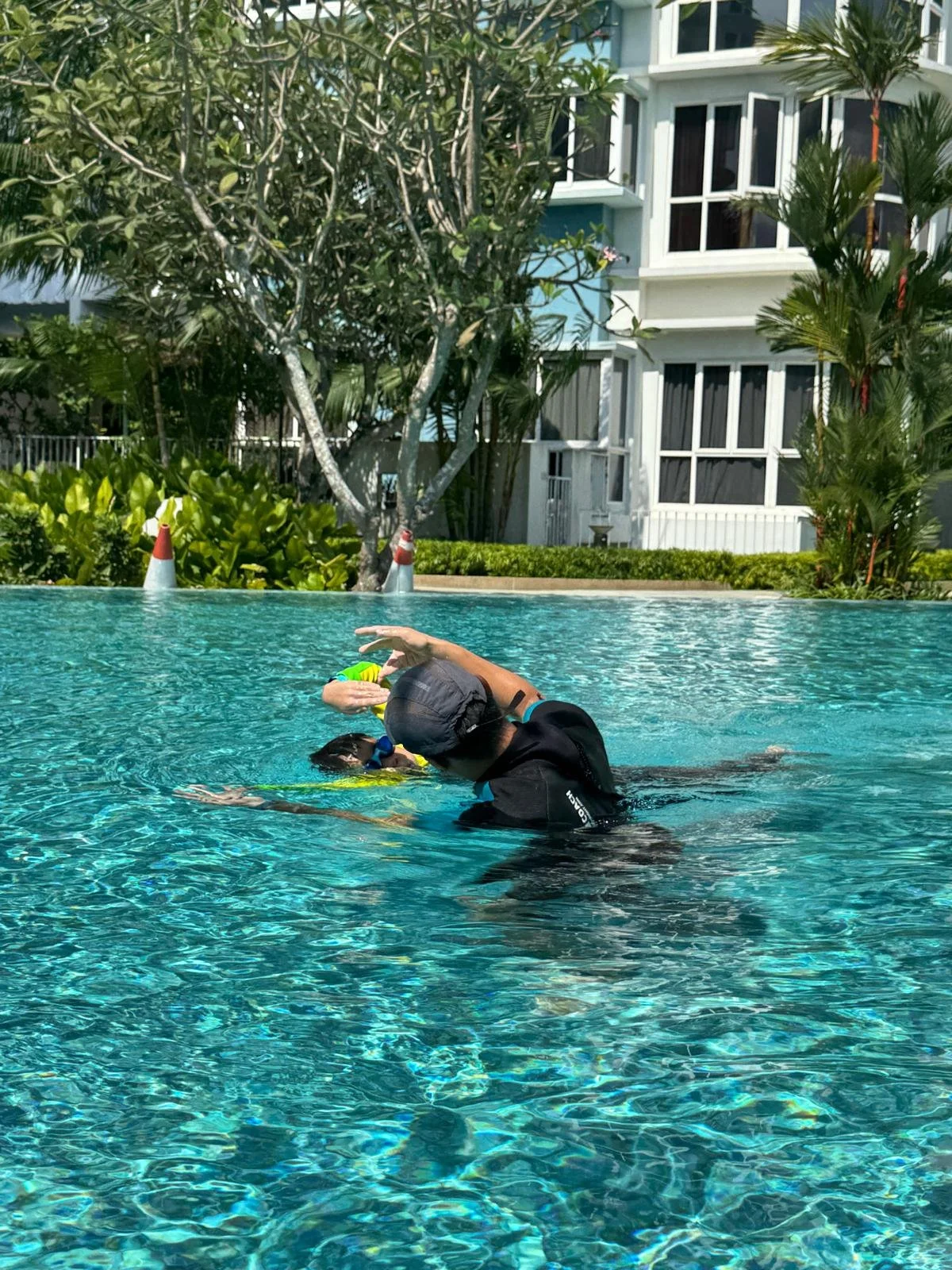
How Swimming Builds Coordination, Balance and Body Awareness
Swimming requires the whole body to work together
Swimming may look simple from outside the pool, but children must coordinate several movements at once:
Kicking continuously
Moving the arms correctly
Maintaining body position
Turning the head to breathe
Following the direction of travel
This makes swimming a useful activity for practising whole-body movement.
Children learn to understand their body position
Water creates a very different environment from walking or running on land. Children gradually learn how changing their head, hips, arms or legs affects whether they float, sink, turn or move forward.
Research has examined how swimming participation relates to fundamental movement skills and motor competence in children. The evidence suggests that structured swimming can contribute to movement development, although the exact benefits depend on programme quality, age and consistency.
Repetition helps movements become more controlled
A beginner may initially struggle to kick and move their arms simultaneously. With guided repetition, movements can become smoother and more automatic.
Different strokes present different coordination challenges
Front crawl, backstroke, breaststroke and butterfly each require different timing patterns. Children are therefore not simply repeating one movement throughout their swimming journey.
Progress should not be rushed
Coordination develops at different speeds. A child who understands a movement but cannot execute it consistently may simply need more time and appropriate practice.
Our structured Learn to Swim programmes help children develop water confidence, coordination and correct swimming foundations progressively.