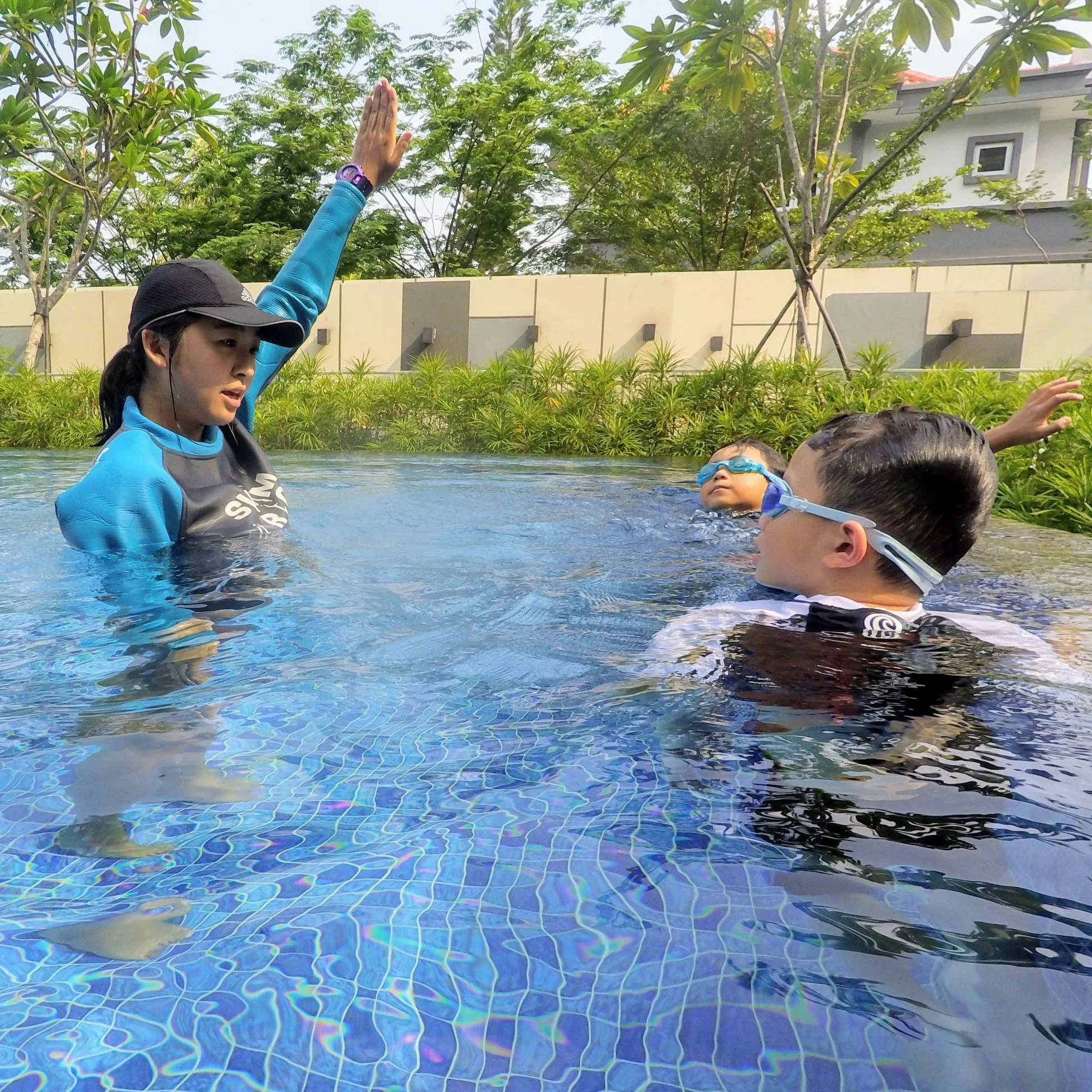
How Group Swimming Lessons Build Social Confidence
Children learn alongside swimmers of similar ability
A well-organised group lesson allows children to observe classmates attempting the same skills.
Seeing another swimmer try, make a mistake and improve can make unfamiliar activities feel more manageable.
Research involving fearful young swimmers found that appropriate peer modelling, combined with swimming instruction, could influence swimming performance, fear and self-efficacy.
Children practise waiting and taking turns
Group classes naturally require children to:
Listen while another swimmer receives instructions
Wait safely at the pool edge
Take turns completing drills
Respect other swimmers’ space
Follow shared class rules
These are useful social behaviours in school and other group settings.
Encouragement can become part of the class culture
Children may clap for classmates, celebrate group achievements or feel motivated after seeing someone else succeed.
Group lessons can develop independence
A child gradually learns to listen directly to the coach instead of depending entirely on a parent.
That shift can help children become more comfortable participating in structured activities independently.
The right class size still matters
A group should be organised according to ability, age, pool environment and coaching capacity. A class that is too large or contains very different skill levels may provide less individual attention.
Compare our private and group swimming lesson fees to find a suitable arrangement for your child.